


By Tara Dakin Sauer, LMFT, PMH-C | Virtual therapist for moms in Colorado and Georgia | Last updated November 2026
You haven’t felt like yourself since having the baby… but you’re not sure if it’s “bad enough” to get help. Maybe you keep telling yourself that you’re fine, that you’ll figure it out, or that you just need to give it more time.
A lot of new moms wonder how they’re supposed to know when it’s time to reach out for professional help. But if you’re even asking that question, that in itself is a sign it would be a good idea to reach out.
This post will help you figure out whether it’s time to reach out, who to talk to first, and what to say when you do.
The short answer: When should you get help for postpartum depression or anxiety? As soon as you notice you’re struggling. Whether you’re worried it’s not bad enough or worried what people will think if you say how bad it is, you deserve help now. And it doesn’t matter if your baby is two weeks old or already a toddler – it’s never too early or too late.
Signs It’s Time to Get Help for Postpartum Depression or Anxiety
The bad news:
Unfortunately, postpartum mental health disorders (PMHDs) don’t have any kind of expiration date. Many moms do start to feel better just with time, but for a lot of them, the symptoms can hang on for months or even years.
Research has shown that about 30% of moms with postpartum depression were still depressed up to three years after giving birth. That is a very long time!
The good news:
That doesn’t have to be you. You don’t have to just wait it out to see if things get better with time.
You deserve to start feeling better NOW.
Here are some signs it’s time to reach out:
- You just know something isn’t right
- The thoughts or emotions you’re experiencing are confusing, overwhelming, or scary
- How you’re feeling is keeping you from being the parent you want to be
- You’ve been really trying to manage on your own (prioritizing self-care, getting breaks, trying different coping tools) and it just isn’t working
- Despite your best intentions, you can never actually bring yourself to use any coping tools, ask for help, or let someone else watch the baby so you can take a break
- You feel better when you get a break or more rest, but it all comes back as soon as you’re alone with the baby again
- The coping tools or other strategies you’re using do work, but it never lasts, and you’re exhausted having to constantly use them
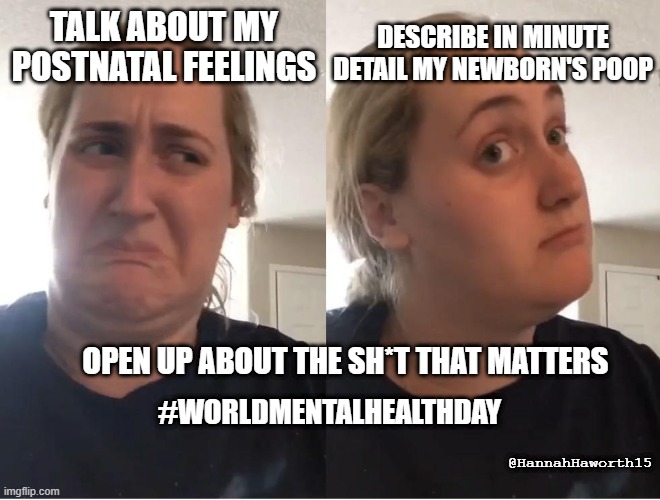
- You’re sharing memes like this on social media or in a text to a friend:

Humor (even dark humor) can be a great way to cope in the moment, but it doesn’t actually solve the problem. Surviving the day through jokes and sarcasm isn’t a long-term plan, and the same goes for a lot of other coping tools.
Why Coping Tools Aren’t Always Enough
I call coping strategies “weed wackers.” Imagine that all your thoughts, emotions, body sensations and behaviors make up a little garden in your mind. Coping tools are a perfect, quick way to clean up any pesky weeds that started growing during pregnancy or after your baby was born.
Before becoming a parent, your garden may have been carefully structured and pristinely manicured…or perhaps yours was always more whimsical and untamed. Whichever describes you, pregnancy, childbirth, and postpartum upends almost every garden to some degree. But for some moms, their garden becomes so overgrown with weeds that it’s unrecognizable.
If that’s you, coping strategies will still help you feel better. You can wack those weeds, and for a little while it will look better and you’ll feel like you can breathe again. But they’re going to keep growing back, and you’ll need to keep using those tools over and over again.
Pleeeease don’t accept feeling this way as your new normal, or think that because you’re a parent now, this is as good as it’s going to get. You CAN feel better. It just means taking a closer look at those weeds and getting help to heal the root cause of why you’re struggling.
How to Start the Conversation About Postpartum Depression or Anxiety
There is no one right person to open up to first. Eventually you’ll want to talk to your partner so they can support you in the process of getting help. But if you’re more comfortable first telling your best friend, your sister, or that co-worker you know went through postpartum depression, that’s fine!
The key is to say it out loud to somebody you trust to hold you accountable for reaching out for help.
How to Talk to Your Doctor About Postpartum Depression (or Anxiety)
There’s also no one right professional to first reach out to for help. It may depend on if you are interested in taking medication or not, but you can always start with whoever is easiest to connect with or whichever provider you feel most comfortable talking to about how you are feeling. All kinds of providers can help you determine your next steps, especially those you may already be seeing regularly postpartum like your lactation consultant or your pelvic floor physical therapist. If you already know you’re considering or interested in taking medication, your primary care doctor or OBGYN are probably the best options to call. Almost all PCPs and OBGYNs will prescribe medication to new moms and there are many medication options that are safe for breastfeeding.
Do You Have to Wait Until Your 6-Week Checkup?
No! Many moms think they have to wait until their 6-week checkup to say anything, because they’re worried they’ll just be told to give it more time. There’s this idea out there that if you’re really struggling in the first month or so, you should try to ride it out, because it’s only a problem if you still feel that way at 6 weeks.
Yes, the first two weeks are often a period of emotional instability due to the intense hormonal fluctuations that occur after childbirth and the initial adjustment to having a new baby. These mood swings are often described as the “baby blues” and are experienced by the vast majority of birthing parents.
But PMHDs can start ANY time postpartum, even in the first two weeks. So if you are experiencing symptoms at any point in time that are concerning to you or are impacting your ability to care for yourself or your baby, don’t wait. Reach out as soon as possible.
Can Your Baby’s Pediatrician Help?
Yes! If you really love your pediatrician and your baby has a checkup in the next few days, that can be a great place to start. Their focus is on the baby, but you shouldn’t let your baby’s needs push your own needs aside. In fact, the American Academy of Pediatrics recommends that pediatricians screen moms for depression at the 1, 2, 4 and 6 month well-baby visits.
Your pediatrician won’t be able to treat you, but they can help you get connected to someone who can. It’s also good for them to know what you’re dealing with so they can better support you with any concerns about your baby.
What Should You Say?
Don’t worry too much about what to say. It doesn’t need to be fancy or eloquent. Something like, “I just had a baby and I’m worried about my mental health,” is enough, and they can take it from there.
What If Your Doctor Brushes You Off?
Most postpartum professionals and pediatric providers are great about wanting to support new parents with postpartum mood issues. Unfortunately, some moms bring it up and are told something like, “Meh, you just had a baby, that sounds totally normal!”
But I don’t care if they minimize or dismiss your concerns: if you were worried enough to have brought it up, then there is a problem and you deserve to be taken seriously. So either push back or call someone else until you get the help that you need.
Free Download: The 6-Week Checkup Discussion Tool
To help with these conversations, I created a discussion tool you can fill out and share with your doctor. I call it the 6-Week Checkup Discussion Tool, but it’s not just for the postpartum visit with your OBGYN or midwife. You can use it at ANY time, with ANY provider. It has two checklists:
- Risk factors: things you may have experienced during pregnancy or childbirth, or since your baby was born, that increase your risk of developing a PMHD, so your provider understands more of what you’ve been dealing with
- Symptoms: common ways PMHDs show up in the first weeks and months, so you can explain how you’re struggling and your provider can better understand what kind of help you need
Download the free 6-Week Checkup Discussion Tool (PDF)
Do You Need a Referral to See a Therapist?
No. You can also reach out to a therapist at ANY time. I sometimes hear moms say they feel like they need permission to call a therapist, like they have to say their doctor told them they need therapy. But that’s not true! Some insurance plans may require prior authorization, but generally (in the U.S. at least) you don’t need a referral to see a therapist. (Not sure where to start? Here’s how to find a therapist that’s right for you, plus what to look for when searching and screening.)
Research on depression suggests that combining therapy and medication might work better than either one alone, so it’s a good idea to call your doctor AND start looking for a therapist. But if you’re still unsure about medication or already know you really don’t want to take it, therapy alone is still a great treatment option. (You can read more on that in Therapy or Medication: Understanding Treatment Options.)
If You Need Help Right Now
This post is general information and isn’t a substitute for individual care.
If you are seeing or hearing things that others can’t see or hear, or if you are having thoughts of harming yourself or your baby and you don’t totally trust yourself not to act on those thoughts, call 911 or go to the ER. You can also call or text 988, the Suicide and Crisis Lifeline, any time.
For support that isn’t an emergency:
- National Maternal Mental Health Hotline: call or text 1-833-TLC-MAMA (1-833-852-6262), free and confidential, 24/7, in English and Spanish
- Postpartum Support International HelpLine: call 1-800-944-4773, text in English at 800-944-4773, or text en Español at 971-203-7773. Leave a message and a trained volunteer will get back to you.
Ready for Support?
I’m a perinatal mental health certified (PMH-C) therapist offering virtual therapy for moms in Colorado and Georgia. If you know something isn’t right and you’re ready to talk to someone, you don’t need a referral or a perfect way to explain it. Book a free 15-minute consultation call and we’ll figure out your next step together.
FAQ
Do I have to wait until my 6-week postpartum checkup to ask for help? No. You can call your OB or primary care doctor, or reach out to a therapist, at any time postpartum, even in the first two weeks.
Can my baby’s pediatrician help with postpartum depression? Yes. They can’t treat you themselves, but they can help you figure out next steps and connect you with care. The American Academy of Pediatrics recommends that pediatricians screen moms for depression at the 1, 2, 4 and 6 month well-baby visits.
Do I need a referral to see a therapist for postpartum depression or anxiety? Generally, no, at least in the U.S. Some insurance plans require prior authorization, so check your plan, but you can reach out to a therapist directly.
When will postpartum depression go away? There’s no set timeline. Symptoms often ease with time, but for many moms they don’t fully go away on their own and they require some kind of treatment to feel better. One review found about 30% of moms with postpartum depression in community studies were still depressed up to three years after birth. But you don’t have to wait it out!
How do I talk to my doctor about postpartum depression? Keep it simple: “I just had a baby and I’m worried about my mental health.” You can also bring the 6-Week Checkup Discussion Tool to help explain what you’re experiencing.
Leave a Reply

Contact
THANK YOU!
We received your information and we will be in touch soon. Please allow 48 hours response time.

